### A Historical Overview of Aviation Seat Design and Its Adaptation for Use in Light Trucks
#### Company Introduction
In the ever-evolving vehicle seat industry, innovation is a constant factor driving advancements and improvements in ergonomics, safety, and comfort. As a professional seat manufacturer based in China, our company has dedicated itself to Research and Development (R&D) to create products that meet the diverse needs of various sectors, including aviation, construction machinery, and agricultural vehicles. Our mission is to leverage core technologies to design seats that not only enhance user experience but also withstand harsh working conditions. In this article, we will explore the historical journey of aviation seat design and its remarkable adaptation for light trucks and other heavy-duty vehicles.
#### The Evolution of Aviation Seat Design
The roots of aviation seat design can be traced back to the early 20th century when the first passenger aircraft began to take flight. Early designs were rudimentary, often consisting of simple benches with minimal padding. However, as air travel became more popular, the demand for comfort and safety grew significantly. This led to a paradigm shift in seat design as manufacturers began investing in R&D to create more sophisticated seating solutions.
**1. Safety and Ergonomics: The First Considerations**
In the mid-20th century, aviation seat design underwent significant changes, driven primarily by the increasing emphasis on passenger safety and comfort. The introduction of crash testing and safety regulations prompted manufacturers to rethink their designs. Seats were equipped with improved shock absorption features and harness systems to secure passengers during turbulent flights.
Ergonomics emerged as a crucial aspect of seat design, focusing on how the human body interacts with the seat. This consideration was essential not just for passenger comfort but also for reducing fatigue during long flights. The integration of adjustable lumbar support, headrests, and reclining capabilities became standard features in commercial aviation seats.
**2. Materials and Technology Advancements**
With advancements in materials technology in the late 20th century, aviation seats became lighter and more durable. Manufacturers began using composite materials and high-strength alloys to ensure safety without compromising weight efficiency. Additionally, air suspension systems were introduced, allowing seats to adapt to varying pressures and weights, enhancing both comfort and stability.
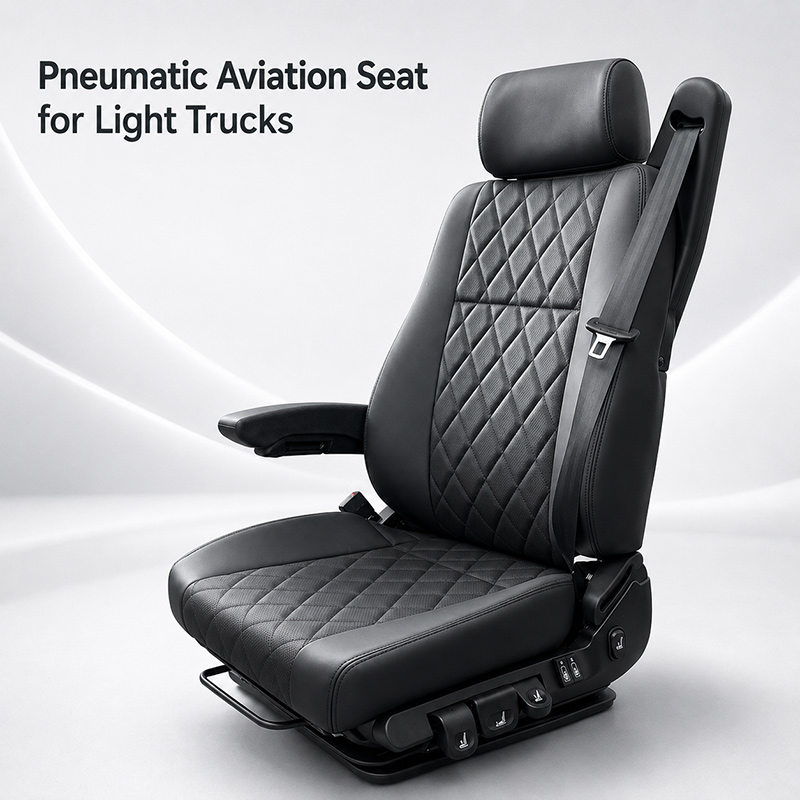
Electric aviation air suspension seats revolutionized the experience for passengers, providing unparalleled customization options and comfort levels. These seats could respond to individual preferences, adjusting height, tilt, and firmness at the touch of a button, thus setting new standards in the aviation industry.
#### Adaptation for Light Trucks and Other Vehicles
As the principles of aviation seat design matured, the automotive sector took notice. The adaptation of aviation seat technology for light trucks and other heavy-duty vehicles like loaders, excavators, tractors, and harvesters became a viable avenue for innovation. This transition was fueled by the need for enhanced operator comfort and safety in challenging environments.
**1. Ergonomics in Heavy-Duty Vehicles**
Just as in aviation, ergonomics plays a critical role in the design of seats for light trucks and machinery. Operators of heavy-duty vehicles often work long hours in strenuous conditions, making it imperative for their seating solutions to offer comfort and support. Drawing inspiration from aviation, manufacturers incorporated adjustable features such as lumbar support, seat depth, and armrest positioning into their designs.
Ergonomically designed seats help prevent musculoskeletal disorders among operators, thereby improving productivity and reducing downtime due to injuries. Features like shock absorption and vibration dampening became essential considerations, particularly in vehicles that operate on uneven terrain.
**2. Shock Absorption and Durability**
The harsh working conditions faced by machinery operators necessitate robust seating solutions. Heavy-duty vehicles are often subjected to vibrations, jolts, and bumps, which can lead to discomfort and fatigue for operators. To address this, manufacturers adapted aviation technologies such as air suspension systems to create seats that provide superior shock absorption.
These advanced seating solutions are engineered with durable materials that can withstand the rigors of construction and agricultural environments. For instance, seats designed for excavators and loaders must be capable of enduring exposure to moisture, dust, and extreme temperatures while maintaining their structural integrity and comfort features.
**3. Industry-Specific Innovations**
Recognizing the unique demands of various vehicle types, manufacturers have developed tailored seating solutions for specific applications. For instance, farm vehicle seats are designed with added cushioning and waterproof materials to accommodate long hours spent in fields. Similarly, seats for construction machinery often include reinforced frames and heavy-duty upholstery to resist wear and tear.
Furthermore, the integration of advanced technologies such as temperature control and heating elements has entered the realm of heavy-duty vehicle seating, enhancing comfort for operators regardless of external weather conditions.
#### The Role of R&D in Shaping the Future of Vehicle Seats
As a leading professional seat manufacturer, our commitment to R&D drives our innovations in seat design. We invest heavily in studying user feedback, conducting trials, and exploring new materials and technologies to create products that stand out in the market.
Our research focuses on understanding the needs of operators across different industries, from agriculture to construction, to develop seats that not only meet but exceed expectations. By collaborating with experts in ergonomics and mechanical engineering, we ensure that our products deliver optimal performance, durability, and comfort.
**Product Advantages**
1. **Enhanced Comfort**: Our seats are designed with ergonomic principles in mind, ensuring that operators remain comfortable during long hours of use.
2. **Shock Absorption Technologies**: Advanced air suspension systems and shock absorbers provide a smooth ride, reducing operator fatigue.
3. **Durability**: Our products are built to last, utilizing high-quality materials that resist wear and tear in harsh working conditions.
4. **Customization Options**: Many of our seats come with adjustable features, allowing operators to tailor their seating experience according to their individual preferences.
#### Conclusion
The journey of aviation seat design has significantly influenced the evolution of seating solutions in light trucks and heavy-duty vehicles. By leveraging decades of advancements in ergonomics, safety, and technology, manufacturers have created products that enhance operator comfort and productivity in challenging environments.
At our company, we continue to embrace the spirit of innovation, drawing inspiration from the aviation industry to develop cutting-edge seating solutions for construction machinery, farm vehicles, and beyond. As we look to the future, our commitment to R&D will enable us to stay at the forefront of the industry, delivering products that cater to the ever-changing needs of our clients while ensuring the highest standards of quality and performance.